Bollards vs Road Blockers: Entrance Security Equipment Comparison
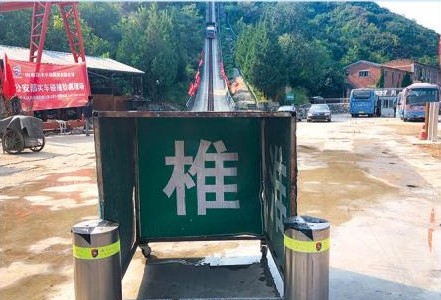
Protection Level Comparison
Road blockers offer higher impact ratings with welded steel plate construction, effectively stopping heavy trucks at high speed. Bollard impact resistance depends on column diameter and wall thickness. PROCOLUM hydraulic bollards have passed real-vehicle crash tests by the Ministry of Public Security, meeting GA/T1343-2016 Grade A/B standards. For military bases and nuclear facilities, road blockers are recommended; for government compounds and commercial parks, bollards meet security needs while maintaining aesthetics.In the GA/T1343-2016 standard, Grade A covers standard passenger vehicles while Grade B covers mid-size buses — confirm the vehicle tonnage and speed your site must stop, then select the corresponding certified grade.
Installation Comparison
Bollard embedment depth ranges from 800-1100mm, requiring C25+ concrete foundation. Road blockers need 1500mm+ depth with stricter underground utility requirements. Bollards suit existing building retrofits; road blockers suit new construction with integrated planning.
Cost Comparison
Individual bollard cost is approximately 30-50% of a road blocker, with multi-bollard configurations offering greater savings. For entrances exceeding 10 meters, 6-8 bollard configurations save over 40% compared to road blocker solutions. Bollard hydraulic systems require annual servicing; road blocker stations consume more power with higher maintenance costs.Over the full lifecycle, bollards typically last 8-10 years with replaceable hydraulic components at controlled cost; road blockers have heavier structures but a single major overhaul can reach 15-20% of the purchase price. A single bollard lift consumes about 0.02 kWh, so multi-bollard daily electricity costs stay under 1 yuan.
Recommendations
Choose bollards for government compounds, corporate parks, commercial plazas, schools, and hospitals. Choose road blockers for military zones, prison perimeters, vault entrances, and hazardous material warehouses. PROCOLUM provides both product lines with tailored combination solutions.Consider management style too: for remote centralized control integrated with barriers and license plate recognition, choose intelligent control bollards; for occasional temporary control only, semi-automatic or manual models suffice.